The Screen-Free Reset: A Practical Step-by-Step Guide for Parents

The Screen-Free Reset: A Practical Step-by-Step Guide for Parents
If you’re ready to reduce screen time in your home—but don’t know where to start—this is for you.
Not perfect. Not extreme. Just real, doable steps that actually work (even in the messy seasons).
Step 1: Get Honest About Your Starting Point
Before you change anything, take a day or two to observe.
- How many hours are screens on?
- When are your kids asking for them most?
- Are they bored… or just used to constant stimulation?
No guilt here—just awareness.
Because you can’t change what you don’t see clearly.
Step 2: Choose Your “Anchor Rule”
Instead of saying “no more screens” (which usually backfires), create one clear, simple boundary.
Example (what we do):
👉 No screens Monday–Friday until 7 PM, then 1 hour of family TV
This works because:
- Kids know what to expect
- There’s no constant negotiating
- Screens become intentional—not default
Pick something realistic for your family.
Step 3: Expect the Detox (And Don’t Quit When It Hits)
This is the part most parents aren’t prepared for…
When you remove screens, kids don’t instantly become peaceful, creative little humans.
You’ll likely see:
- Tantrums
- “I’m bored” on repeat
- Clinginess
- Big emotions
This is withdrawal from constant stimulation.
And it’s temporary.
Hold your boundary with calm confidence:
“I know it’s hard. We’re doing something different now.”
Step 4: Replace—Don’t Just Remove
If you take screens away without offering alternatives, you’ll feel like you made a mistake.
You don’t need Pinterest-level activities. Keep it simple:
Low-effort ideas:
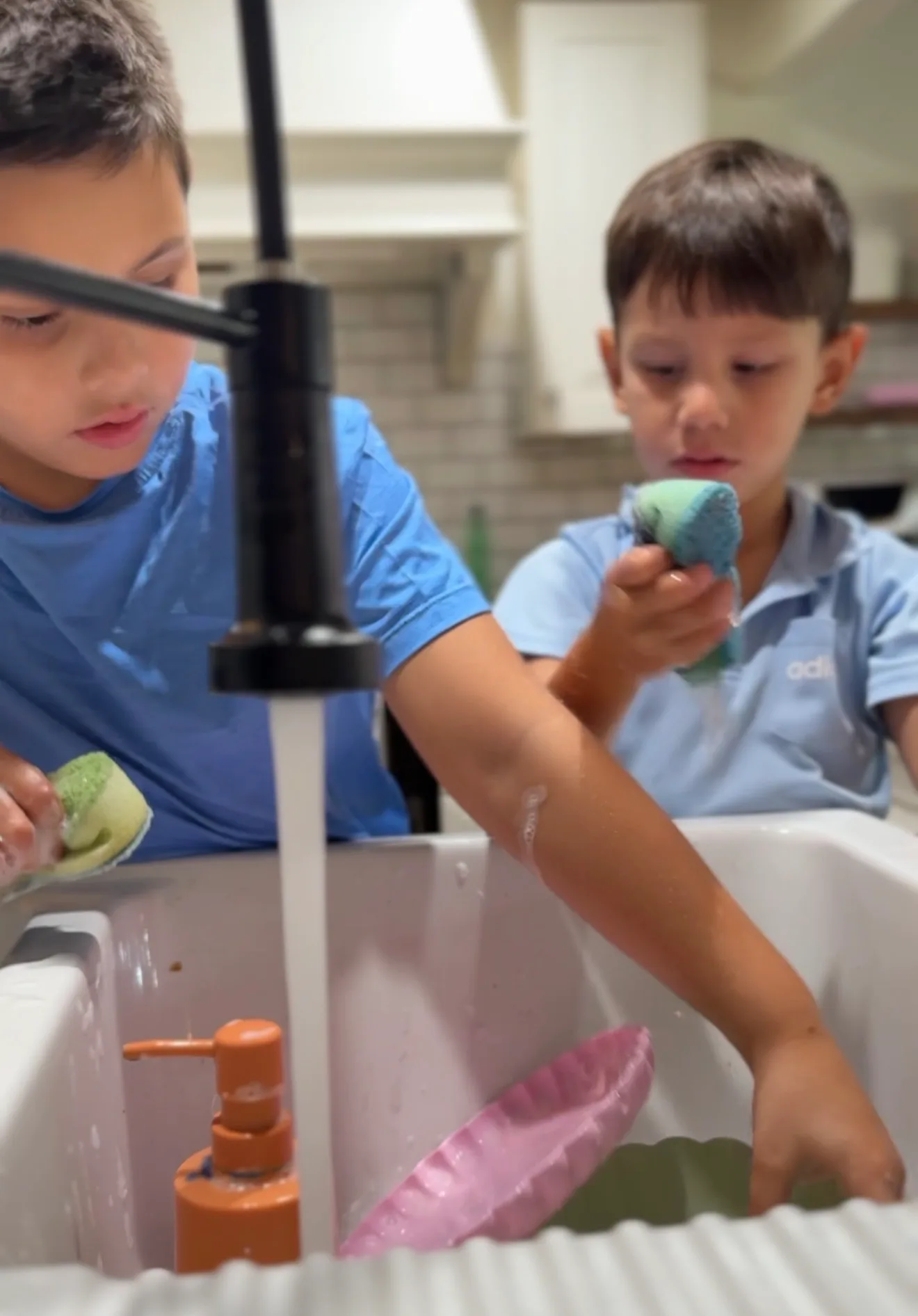
- Water play in the sink or outside
- Coloring, stickers, or cutting paper
- Building with blocks or магнитiles
- Audiobooks or music
- Going outside (even just your backyard)
- Helping you cook or clean
The goal isn’t to entertain them all day.
It’s to reintroduce real-life play.
Step 5: Create a Loose Daily Rhythm
Kids thrive when they know what comes next.
You don’t need a strict schedule—just a flow:
- Morning: breakfast + slow start
- Mid-morning: outside time or activity
- Afternoon: quiet play / rest
- Evening: family time + wind-down
This reduces the constant:
“Can I watch something?”
Because their day already has structure.
Step 6: Make Evenings Intentional
Instead of random screen use all day, create a shared experience.
Your new mindset:
👉 Screens aren’t a babysitter—they’re a family activity.
Sit together. Watch together. Talk about it.
This changes everything.
Step 7: Hold the Boundary (Even When It’s Inconvenient)
There will be moments when giving in feels easier.
Long day. No energy. Kids melting down.
But consistency is what makes this work.
You don’t need to be rigid—you just need to be clear and steady.
Step 8: Give It Time (This Is Where the Magic Happens)
Most families quit too early.
But if you stick with it, you’ll start noticing:
- Longer independent play
- More creativity
- Fewer tantrums
- Better connection
It won’t happen overnight.
But it will happen.
Step 9: Redefine “Boredom”
This is big.
Boredom isn’t a problem—it’s a doorway.
It’s where imagination starts.
It’s where problem-solving begins.
It’s where kids learn to create their own fun.
So when your child says:
“I’m bored.”
You can respond with:
“That’s okay. You’ll figure something out.”
And they will.
Step 10: Give Yourself Grace
You’re not failing if:
- You have a hard day
- You use screens more than you planned
- You need a break
This isn’t about perfection.
It’s about shifting your home little by little.
You’re not just reducing screen time.
You’re creating a home where:
- Connection is stronger
- Play is deeper
- Learning happens naturally
And most importantly…
Your kids learn how to live in the real world—not just watch it.